How Personal Trainers in Australia Are Building Multiple Income Streams in 2026

If your entire income as a personal trainer depends on clients showing up to sessions, you’re one quiet month away from a stressful one.


It’s not a criticism, it’s just the reality of how most PTs structure their business. One service, one revenue stream, one point of failure. And in an industry where clients travel, get injured, go through life changes and sometimes just go quiet that model leaves you exposed.


The smartest personal trainers in Australia right now aren’t just trainers. They’re fitness business owners. They’ve built multiple ways to earn from their expertise, some that require their physical presence, some that don’t. And the gap between those two groups is only getting wider.


Here’s exactly how they’re doing it.

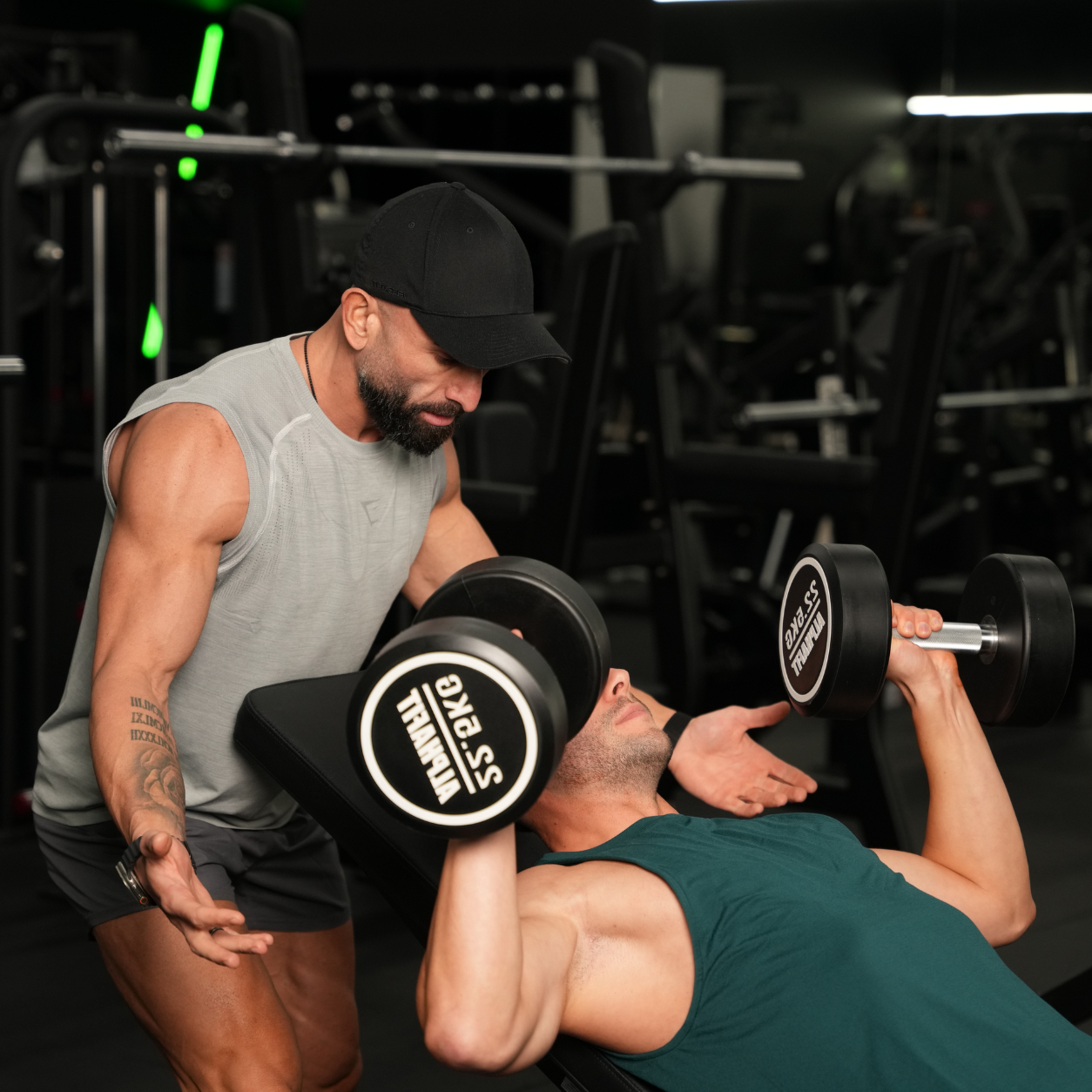
1. In-Person 1:1 Sessions - Your Foundation

This is where most PTs start and for good reason. One on one personal training is the highest-touch, highest-value service you can offer. The relationship you build with a client in person is unmatched and the results you can deliver working with someone directly are what build your reputation.


But here’s the ceiling, your income is capped by your hours. There are only so many sessions you can run in a week before you burn out. In-person training is your foundation, not your limit.


How to maximise it: charge what you’re worth, build a waitlist so demand always exceeds supply and use your reputation from in-person results to fuel everything else on this list.

2. Online Coaching Packages - Your First Expansion

Online coaching is the most natural next step for any PT with an established reputation. You take the expertise you already have, the programming you already do and you deliver it to clients who can’t train with you in person whether that’s interstate, internationally or simply people who prefer the flexibility of training on their own schedule with professional guidance behind them.


The model is straightforward. A client signs up for your online coaching package, you build them a structured program, check in with them regularly, adjust their training as they progress and support them through the platform. You’re not trading hours for dollars in the same way. You’re trading expertise for a recurring fee.


The key to making it work: clear communication, consistent check-ins and a platform that keeps everything, programs, messaging, progress in one place so managing online clients doesn’t become a second full-time job.

3. Group Training and Classes - Leverage Your Time

One of the most powerful shifts a PT can make is moving from serving one client per hour to serving ten. Group training does exactly that.


Whether it’s a small group PT session of four to six people at a lower per-head price point, a bootcamp style class or a speciality session built around your niche.group training multiplies your earning potential without multiplying your hours.


Clients get a more affordable way to access your expertise. You get a fuller schedule and a stronger sense of community around your brand. Everyone wins.


What to consider: keep groups small enough that you can deliver quality coaching to every person in the room. A group session that feels like a personal training session builds loyalty. One that feels like being lost in a crowd doesn’t.

4. Structured Fitness Programs - Earn While You Sleep

This is where things get interesting.


A structured fitness program is a pre-built training plan, a 6-week fat loss program, a 12-week strength build, a 4-week beginner foundation that a client purchases and follows independently. You build it once. You sell it as many times as you want.


This is passive income in the truest sense. Once the program exists it generates revenue whether you’re on the gym floor, on holiday or asleep. And for clients who aren’t ready to commit to full coaching it’s a lower barrier entry point that often leads to a longer-term relationship down the track.


The smartest PTs build two or three programs that speak directly to their niche audience and sell them through their profile. A fat loss specialist sells a fat loss program. A strength coach sells a strength program. The alignment between your expertise and your product makes it an easy sell.

5. Coaching Plan Subscriptions - Recurring Monthly Income

If structured programs are a one-time sale, coaching plan subscriptions are the recurring revenue version. A client pays a monthly fee to be part of your coaching ecosystem, they get ongoing programming, regular check-ins, access to your messaging and the accountability that comes with a consistent coaching relationship.


This model is the closest a PT can get to a salary. Predictable income, month after month, from a group of committed clients who value the ongoing relationship with you as their coach.


The difference between this and one-on-one sessions: subscription coaching is scalable. You can take on more subscription clients than you can in-person clients because the time commitment per client is lower. Managed well it becomes the most stable and scalable part of your entire business.

Putting It All Together

Here’s what a well-structured PT business with multiple income streams looks like in practice:

● Monday to Friday – in-person 1:1 sessions with your core client base. Your highest-ticket, highest-touch service.
● Running simultaneously – three to five online coaching clients on monthly subscriptions. Check-ins happen through the platform, programs update weekly, communication is async.
● Tuesday and Thursday mornings – a small group training session. Six clients, one hour, fraction of the cost of 1:1 for them, multiple of your hourly rate for you.
● On your profile – two structured programs available for purchase at any time. A beginner program and a speciality program aligned to your niche.
● Available to anyone – a coaching plan subscription tier for clients who want your guidance without the in-person commitment.

That’s five income streams running from one PT business. Some require your presence. Some don’t. All of them are built on the same thing — your expertise and your reputation.

The Technology Question

The reason most PTs don’t build multiple income streams isn’t lack of ambition, it’s that managing everything across different tools becomes overwhelming fast.


Bookings in one app. Programs in another. Payments through bank transfer. Client communication across Instagram DMs, WhatsApp and email. It becomes a logistical nightmare that eats into the time you should be spending on actually coaching.


The PTs who make this work are the ones who run everything from one place. One platform that handles bookings, programs, coaching plans, client management and payments simultaneously, so scaling your income doesn’t mean scaling your admin.

The Bottom Line

The most financially resilient personal trainers in Australia in 2026 aren’t the ones with the most clients. They’re the ones with the most diversified income. Multiple streams, multiple touch points, multiple ways for clients to access their expertise at different price points and commitment levels.


Building that kind of business takes time. But it starts with a decision, to stop thinking of yourself as a trainer who gets paid by the session and start thinking of yourself as a fitness business owner who has built something that earns in more ways than one.


The tools exist. The demand exists. The only question is whether you’re ready to use them.


Trainer Circle is built for exactly this kind of PT business. Manage your in-person bookings, online coaching plans, structured programs, group sessions and client payments all from one platform with a single profile link you can share anywhere.

Join early access today and lock in your lifetime founding rate.

Why Trainer Circle Is the Future of Fitness in Australia

The Way Australians Do Fitness Is Changing

Walk into any gym in Australia today and you’ll find something that didn’t exist ten years ago…a personal trainer running an entire business from their phone.


Booking clients. Delivering online programs. Managing payments. Communicating with a roster of coaching clients on the other side of the country. All while showing up to the gym floor every morning to train their in-person clients.


The modern fitness professional is running multiple income streams simultaneously. And the gyms housing them are trying to keep up. Managing trainers, classes, bookings, payments and client relationships across tools that were never designed to work together.


The fitness industry has evolved. The platforms supporting it haven’t.


That’s about to change

The Problem With How Fitness Works Today

The Australian fitness industry is worth billions and growing faster than almost any other sector. But underneath that growth sits a fragmented, inefficient infrastructure that costs gym owners revenue, costs personal trainers clients and costs fitness enthusiasts the seamless experience they deserve.


Gym owners manage their business across three or four disconnected tools. Personal Trainers chase clients through Instagram DMs. Clients Google for a PT, hope someone replies and book through a process that involves more steps than it should.


The three core groups that make the fitness industry work, Gyms, Trainers and Clients are operating in separate worlds with no single platform connecting them.


That’s the problem Trainer Circle was built to solve.

A Platform Built for Every Role

Trainer Circle is not a booking tool. It’s not a gym management system. It’s not a PT app.


It’s all three connected in one platform designed specifically for the Australian fitness market.


Every role has its own dedicated experience. Every experience connects to the others. And the result is a fitness ecosystem that finally works the way the industry always should have.


For Gym Owners – a complete operations platform. Trainer management, class scheduling, client bookings, payments, payroll and room management all from one dashboard. Full visibility over every trainer, every session and every dollar under your roof.


For Personal Trainers and Online Coaches – a business in a platform. Your own dedicated portal with a public profile and shareable booking link, client management, online programs, coaching plans and payments. Everything you need to run and grow your fitness business without touching a single third party tool.


For Clients – the fitness destination Australia has never had. Discover gyms and personal trainers nearby, browse class timetables, book sessions instantly, follow structured training programs and track your progress all from one app.

The Features That Make the Difference

What separates Trainer Circle from every other platform in the fitness space isn’t just the breadth of features, it’s the details that most platforms never thought to build.


Automatic class waitlists that activate the moment a session fills and notify clients the second a spot opens. Instant rescheduling that updates every calendar in real time. Revenue split management that calculates trainer earnings automatically regardless of their employment arrangement. Booking policies that enforce your cancellation rules and no-show fees without a single awkward conversation.


These are the features that don’t make the brochure on competing platforms. They’re the ones that make the difference between a tool you use and a platform you rely on.

Why Australia - And Why Trainer Circle

Every major industry eventually gets a platform built specifically for it. One that understands the nuances of how that industry operates, speaks the language of the people working within it and delivers an experience that genuinely fits the way business gets done.


The Australian fitness industry is at that moment right now.


Trainer Circle is Australian built, Australian focused and designed from the ground up for the way Australian gyms and fitness professionals actually operate. Not adapted from an overseas product. Not repurposed from another industry. Built here, for here, from day one.


The demand is real. The timing is right. And the platform is ready.

What Comes Next

Trainer Circle is launching soon and the fitness professionals who get in early are the ones who will shape what the platform becomes.


Early access members lock in a lifetime member rate that stays with them for life. They get first access when the platform goes live. And they become part of something that is genuinely changing the way Australian fitness operates.


The future of fitness in Australia is connected, streamlined and built around the people who make the industry what it is. The Gym Owners, the Personal Trainers and the Clients they serve.


That future is Trainer Circle.


Join early access today and lock in your lifetime member rate before we launch.

How to Transition From In-Person Training to Online Coaching

The Shift Is Already Happening

Walk into any gym in Australia right now and you’ll find personal trainers doing something that didn’t exist in their job description five years ago, running an online coaching business from their phone between sessions.


The shift from purely in-person training to online coaching isn’t a trend. It’s a permanent evolution in how fitness professionals work and how clients want to access fitness. And the trainers who figure out how to do both simultaneously are building businesses that are more resilient, more scalable and more financially rewarding than anything a full gym floor schedule alone can offer.


If you’re a personal trainer thinking about making that transition this is what you need to know.

Why Make the Move?

Before getting into the how, it’s worth being clear on the why.


In-person personal training is one of the most rewarding careers in the world. But it has a ceiling. Your income is directly tied to the hours you’re physically present with a client. You can only work so many hours, train so many people and earn so much before the model maxes out.


Online coaching removes that ceiling.


A well-structured online coaching business lets you work with clients across the country or the world without being physically present. You build programs once and deliver them at scale. You check in with clients on your schedule. And your income is no longer a direct function of how many hours you can stand on a gym floor.


The transition isn’t about abandoning what you love about in-person training. It’s about building a second business on top of it, one that grows even when you’re not in the gym.

Step 1 - Get Clear on Your Niche

The biggest mistake PTs make when transitioning to online coaching is trying to serve everyone. Online, you’re competing with thousands of coaches across the country. The only way to stand out is to be the best option for a specific person with a specific goal.


Ask yourself, who do I get the best results for? Who do I genuinely love training? Who would I work with all day if I could?


Your answer is your niche.


It might be busy professionals who want to train at home with minimal equipment. It might be women returning to fitness postpartum. It might be powerlifters chasing their first competition total. Whatever it is, own it. The more specific your niche the easier it is to attract the right clients and the easier it is to build programs that work.

Step 2 - Build Your First Online Program

You don’t need to have everything figured out before you start. What you need is one structured program that solves a specific problem for a specific person.


Start with what you already know works. Take the programming logic you’ve been applying with your in-person clients, the progressions, the structure, the periodisation and translate it into a format an online client can follow independently.


A solid first online program includes:

● A clear goal and timeline – what will the client achieve and in how long
● Weekly workout sessions with clear instructions, sets, reps and rest periods
● Progression built in – how the program gets harder as the client gets stronger
● Check-in points – scheduled moments where you review their progress and adjust

Keep it simple. A 6-week or 8-week structured program is easier to sell and easier to deliver than an open-ended arrangement with no clear outcome.

Step 3 - Price It Properly

Online coaching is consistently underpriced by personal trainers making the transition. The logic goes “I can’t see them in person so it’s worth less.” That logic is wrong.


Online coaching is worth what it delivers. If your program gets a client results it is worth the same as or in many cases more than an equivalent period of in-person training. The client gets the benefit of your expertise without the constraint of geography or schedule.

A reasonable starting point for online coaching in Australia:

● 12-week structured program – $300 to $600 AUD one-time purchase
● Monthly online coaching subscription – $200 to $500 AUD per month depending on the level of access and personalisation
● Premium 1:1 online coaching – $500 to $1,500 AUD per month for high-touch, fully customised delivery


Start at a price you’re comfortable defending and increase it as your results and reputation grow.

Step 4 — Set Up Your Client Communication System

The biggest operational challenge in online coaching is communication. Without the natural touchpoint of a face-to-face session, clients can go quiet, lose motivation and disengage before they see results.

Your communication system needs to be proactive, consistent and easy for the client to use. That means:

● A regular check-in structure – weekly or fortnightly, where you review their progress, answer questions and adjust their program
● A single communication channel – not a mix of WhatsApp, email and Instagram DMs. One place, everything in one thread
● Automated reminders – prompts that keep clients accountable between check-ins without requiring you to chase everyone manually

The cleaner and more consistent your communication system the better your client retention and the better your results. Both directly impact your ability to grow.

Step 5 - Get Your Profile and Booking Set Up

Once your program exists and your pricing is set you need a way for clients to find you and book you without it requiring a conversation every single time.


This is where most PTs leave money on the table. They build a program, post about it on Instagram and then wait for DMs. Someone messages, there’s back and forth, it goes quiet and the potential client is gone.


The fix is a professional profile with a direct booking page – one link that goes in your Instagram bio, your email signature and anywhere you show up online. A potential client taps it, sees your services, your packages and your pricing and books directly without a single DM.


Removing that friction is the single biggest lever you have for converting interest into paying clients.

Step 6 — Launch With Your Existing Network First

You don’t need thousands of followers to launch an online coaching business. You need the people who already know you, trust you and have seen what you can do.


Start with your current and former in-person clients. Tell them what you’re building. Offer them a founding client rate as an early adopter. Ask them to share it with anyone they know who’s looking for fitness support online.


Your first five online coaching clients will almost certainly come from your existing network. Those five clients become your first results, your first testimonials and your first social proof which is what attracts the next ten.

Managing Both at Once

The most common concern PTs have about making this transition is time. How do you run an online coaching business on top of a full in-person schedule without burning out?


The answer is structure and systems.


Your in-person sessions run on a fixed schedule. Your online coaching runs in the gaps, check-ins batched on the same day each week, program updates done in one sitting, communication handled through a single platform rather than scattered across your phone.


The goal isn’t to double your workload. It’s to build a second income stream that runs efficiently alongside the first. Done right, an online coaching business adds income without adding proportional hours.

The Bottom Line

The transition from in-person training to online coaching isn’t as complicated as it feels from the outside. It starts with a niche, one program, a clear price and a way for clients to find and book you.


The trainers making it work aren’t the ones with the biggest following or the fanciest content. They’re the ones who built a system, started with what they had and kept going.


Your in-person experience is your competitive advantage online. Use it.


Trainer Circle is built for exactly this kind of PT business – manage your in-person bookings, online coaching plans, structured programs and client payments all from one platform, with a single profile link you can share anywhere.


Join early access today and lock in your lifetime member rate

Request a Demo

Our Gym Demo is available now


    Sign Up


      Join free today. Your spot is secured and your lifetime member rate is locked in.